

For many people, booking a dental consultation brings mixed feelings.
Curiosity, responsibility, even relief — often accompanied by a quiet sense of tension.
Some patients worry about being judged.
Others fear unexpected treatment recommendations.
Many simply feel uneasy because previous experiences were uncomfortable or rushed.
Understanding what actually happens during a dental consultation can ease much of this uncertainty and help patients feel more in control from the very beginning.
“I’m Nervous, and I’m Not Even Sure Why”
Dental anxiety is more common than most people realise.
It affects patients of all ages, including those who attend regularly.
Often, anxiety is not about pain alone. It can stem from:
- Past negative experiences
- Fear of losing control
- Uncertainty about what will be said or recommended
- Concern about being judged for oral health
A modern dental consultation recognises these feelings as valid — not something to be dismissed.
The First Part: Listening Comes Before Examining
A consultation does not begin with instruments or treatment.
It begins with a conversation.
Patients are invited to talk about:
- Their concerns or questions
- Any symptoms they have noticed
- Past dental experiences
- What they are hoping to understand or achieve
This stage is important. It sets the pace and allows the dentist to tailor the consultation to the individual, rather than applying a standard routine.

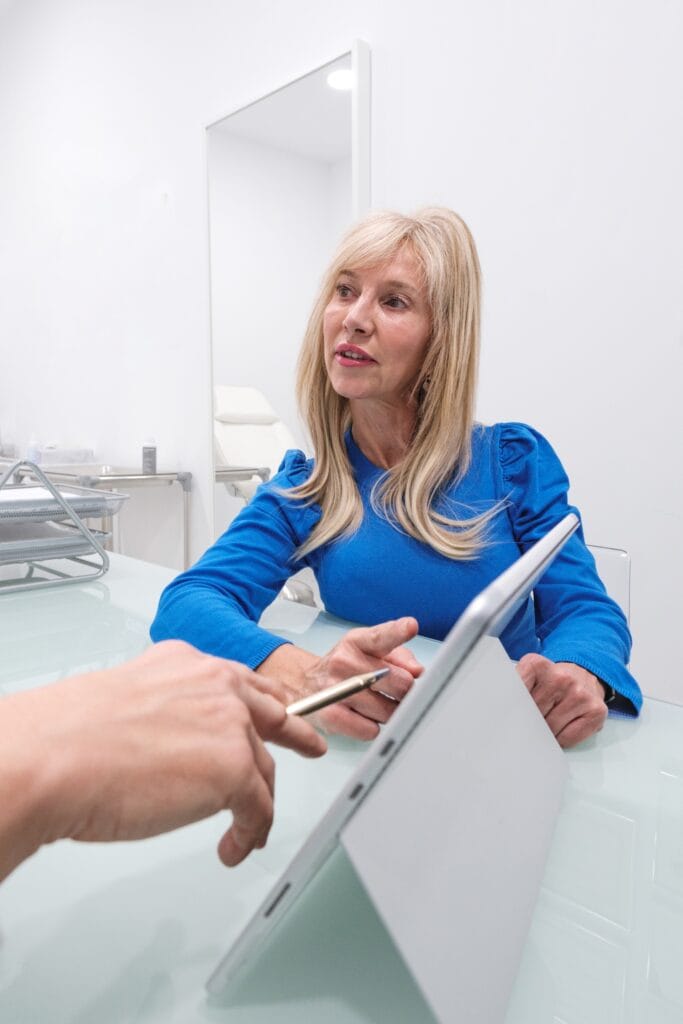
No Surprises: How the Examination Is Carried Out
The clinical examination is usually gentle, structured and explained as it happens.
It may include:
- A visual assessment of teeth and gums
- Checking bite and alignment
- Reviewing existing restorations
- Digital imaging or scans, if appropriate
Patients are encouraged to ask questions at any point. Nothing should feel rushed or unclear.
For those who feel anxious, pauses, explanations and reassurance are part of good clinical care — not an inconvenience.
The Role of Modern Technology in Comfort and Clarity
Technology has changed the consultation experience significantly.
Digital scans, photographs and X-rays allow patients to see what the dentist sees. This often reduces anxiety by replacing uncertainty with understanding.
Rather than being told something is “wrong,” patients are shown findings visually and given context in everyday language.
Technology supports transparency — not pressure.
“Am I Going to Be Told I Need Lots of Treatment?”
This is a common concern, especially for patients who have avoided appointments for a while.
A consultation is about assessment, not obligation.
Discussing findings does not mean treatment is required immediately — or at all.
Where options exist, they are explained calmly:
- What is happening
- What may happen if nothing is done
- What options could be considered
- What can safely be monitored
Patients remain in control of decisions.
Addressing Anxiety — Without Making It the Focus
Many patients worry that admitting anxiety will make the appointment more uncomfortable. In reality, the opposite is often true.
Acknowledging anxiety allows the dental team to:
- Adjust pacing
- Explain more clearly
- Offer breaks when needed
- Focus on comfort and reassurance
Dental anxiety is not a weakness. It is simply part of the human experience — and it is something modern dentistry is well equipped to manage.

What a Consultation Is Not
It is not:
- A commitment to treatment
- A judgement on past care
- A rushed checklist
- A sales conversation
A consultation is an opportunity to understand your oral health in a calm, respectful environment.
A dental consultation is not a one-size-fits-all appointment, and what it involves can vary depending on individual concerns, oral health history, and expectations. While some consultations focus on listening and assessment, others may highlight areas that benefit from monitoring or further investigation over time.
If you’re unsure what to expect from a dental consultation, a calm conversation with a dentist can help clarify how the process works and what kind of guidance may be appropriate for you based on your own situation.